






Beyond Magic Fingers: Sleep Science for Hotels and Resorts
By Lawrence Adams






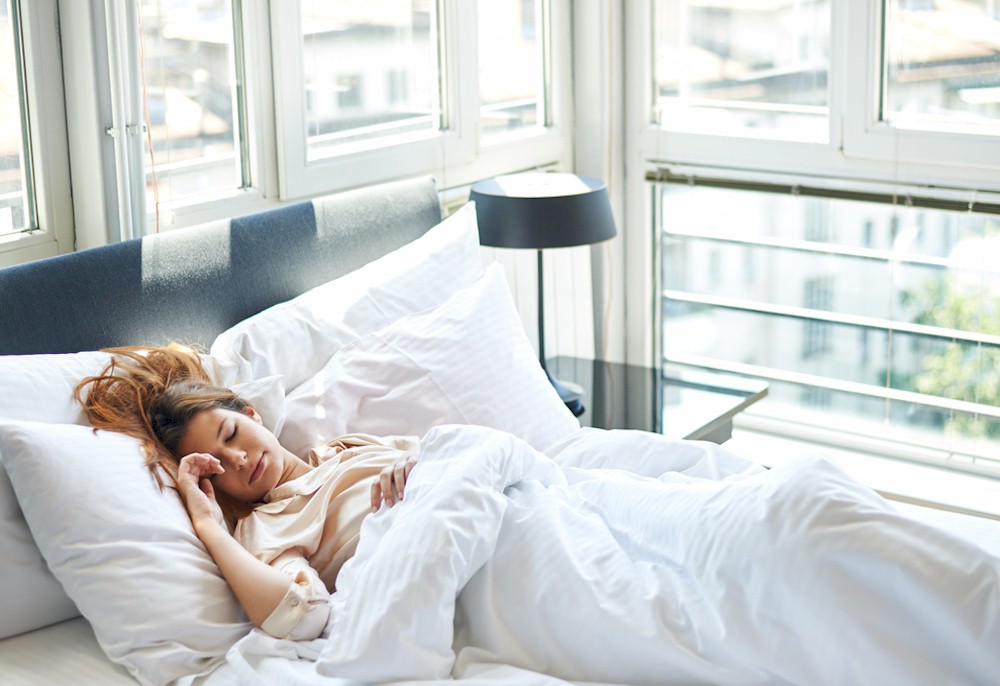
From the second-floor lodging rooms of Silk Road caravansaries and the roadside mansiones of the Roman Empire to today’s limitless variety of hotel accommodations, hospitality’s most important service to its guests has always been the promise of a good night’s sleep.
Heads in Beds has long been the primary objective of hotel companies. While contemporary hotels may provide many guest attractions in the way of fine restaurants, beautiful meeting spaces, lively entertainment, and lavish social spaces, facilitating the opportunity for its guests to have a quiet, comfortable, and secure place to slumber is still its most important provision. Any lodging property that considers itself luxury must excel in this most fundamental offering. It can be argued that any major hotel company that sells luxury brands needs to have a permanent executive position for a Sleep Scientist.
Circadian rhythm is the cyclical 24-hour period of human biological activity. According to the National Institute of Health, The human biological clock is a large group of nerve cells that form a structure called the suprachiasmatic nucleus (SCN) that controls production of the hormone melatonin based on the amount of light the eyes receive. Melatonin generation induces physiological changes that promote sleep, such as decreased body temperature and respiration rate. Retinal exposure to light blocks melatonin production and promotes wakefulness.
Scientific research has determined that there are three basic stages of sleep followed by REM (Rapid Eye Movement) Sleep. A person may cycle through all 4 stages up to 6 times per night to achieve healthy restorative sleep:
Stage 1 (N1) - Falling Asleep - body and brain activity slow down.
Stage 2 (N2) - Light Sleep - body temp drops, slowed breathing, sleep spindles (EEG waves)
Stage 3 (N3) - Deep Sleep, blood pressure and breathing drop, delta brain waves.
Stage R - REM Sleep - body immobile, increased brain activity, dream state.
Before solving the problem of optimal sleep environments for guests, let’s first look at what commonly causes sleeplessness for hotel guests. The causes can be divided into environmental and non-environmental.
The most prevalent environmental problem is acoustics. Mechanical noise from a loud and intermittent air conditioner; the cacophony of sirens or garbage trucks outside your leaky single pane window; a neighbor’s muffled conversations or blaring TV heard through porous guestroom demising walls; hallway doors or adjoining room doors without proper acoustic seals; and intrusive bathroom sounds through poorly insulated plumbing stacks, all contribute to the guest’s misery and sleep deprivation. All these problems can be solved by the owner by investing in proper architectural design and quality construction. For example, owners of the Four Seasons New York Hotel invested in several sound control details including specifications for triple-glazed windows.
Poor control of temperature and humidity has proven to be one of the biggest sleep disrupters. A guestroom that is too hot or too cold makes it impossible to have restorative sleep. Having to request an extra blanket or to complain about a dysfunctional air conditioner in the middle of the night should not happen in a luxury hotel.
Odors and hygiene are another common complaint for guestrooms that have not been properly cleaned and can interfere with a sense of wellness and relaxation. Even before CoVid, a hotelier that didn’t practice exceptional hygiene protocols, was robbing its guests of personal comfort and restfulness.
Safety and security are very important for relaxation. Worrying about intruders will block any chance of restful sleep. This goes beyond having a good locking device on the guestroom door and should extend to the entire lodging experience. Are enhanced security systems in place so guests feel protected from assault, fire, terrorism, or theft? (see Enhanced Security Systems for Hotels and Resorts: Threat Detection and Avoidance by Lawrence Adams, Hotel Business Review, 2019)
Lighting controls are important for circadian cycles of sleep. Black out curtains are a requirement to keep ambient city light and early morning sunshine from disturbing sleep. Stumbling in the dark for the bathroom often means finding bright lighting that wakes us prematurely making it difficult to get back to sleep. Waking up to a dark room can feel disorienting and drain energy at dawn.
Lastly an uncomfortable bed, pillows and poor bedding goes without saying are anathema for good sound sleep. Guests often complain about trouble sleeping in a strange unfamiliar bed.
All of these environmental problems have practical solutions that are commonly available and relatively easy to address by good hotel design, operations and investment in quality construction.
The most common non-environmental sleep problem for hotel guests is Jet Lag. Travelers who arrive after long transoceanic or transcontinental flights are often victims of this malady. Adjusting to different time zones causes disruption to a guest’s normal 24-hour circadian rhythms and negatively alters their sleep/wake cycle.
Closely related to Jet Lag is late-shift work, where the workday might end very late or next morning requiring the guest to sleep during daylight hours. Also related is Seasonal Affect Disorder (SAD) which is caused by seasonal changes in areas of the globe that get too little or too much sun during parts of the year and can throw off the body clock and cause bouts of insomnia.

Coin-operated Magic Fingers were a common sleep-aid amenity in hotels and motels of the 1960s
Smart Bed Innovations
Magic Fingers was invented in 1958 by John Houghtaling so that a weary traveler could get a motel room with a device connected to the bed that by inserting coins into the control box could be treated to a vibrating mattress on a timing device designed to lull the guest to sleep. A more contemporary solution to the optimal mattress was introduced by Westin in 1999 with the Heavenly Bed concept. Designed by Koni Kim who after extensive research and testing created the high-quality luxurious sleeping experience with plush pillow-top construction over a quilted high-density foam foundation that provides exceptional comfort and support.
Technology in mattress design has advanced to new heights with innovations in sleep system products from companies like Tempur-Pedic, FreshBed, Bryte and Sleep Number. Smart mattresses are designed with advanced technology to enhance the quality of sleep by providing features like adjustable firmness, climate control and personalized comfort settings based on sleep tracking data.
The Bryte Balance Smart Bed with its multisensory Somnify system provides sophisticated adjustable-comfort mattress construction synchronized with sound and motion controls. The mattress core is made up of 90 cylindrical cushions that adjust individually to provide custom support. Sensors in the mattress adjust the array of cushions throughout the sleep cycle to optimize support as body weight shifts during sleep. Dual Comfort Tailoring provides couples with personalized firmness preferences on each side of the mattress. The cushions adjust to 20 grades of firmness, from soft to firm so each partner’s comfort can be based on their individual needs.
Bryte’s Somnify multisensory system provides an app-controlled option of creating a gentle rolling motion through the intelligent cushions that are synchronized with soothing sleep-inducing audio in a virtual tranquilizing ballet. Guests may choose from a library of soundscapes each paired with a unique motion sequence that includes titles like Rolling Thunder, Evening Rain, Floating Chimes, and Autumn Waterfall. Couples may opt for individual experiences by selecting their own sound-motion experience for their side of the bed, using earbuds to provide personal audio.
Bryte’s Sleep Insights app may be set to monitor fundamental attributes of sleep behavior and provide evaluation of sleep quality along several metrics including sleep cycles, sleep stages and sleep efficiency. In advanced settings it can also record and factor in daytime activities. Data collected by the Insights app can be made to influence the program that controls sleep comfort features that adjusts accordingly in real time.
FreshBed has developed an innovative sleep-enhancing mattress that features adjustable climate control to optimize temperature and humidity for individual comfort. Advanced airflow technology draws air in from the underside of the bed and silently pushes it through a medical-grade HEPA filter providing a fresh hygienic low-humidity micro-climate while removing pollen, fine particles, bacteria, and allergens. The unique purification airflow system renders the mattress and linens feeling clean, crisp and dry and hence conducive to sound restful sleep.
Given the variety of preferences for pillow quality, many luxury hotels have started providing guests with a Pillow Menu. Pressure-relieving support and temperature regulating technology are two innovations being made available. Gel-infused memory foam for support and hypoallergenic covers with high thermal conductivity for cooling are often descriptors on the menus. Other offerings might include the Anti-Aging Pillow with vitamin E infused cotton, a Tatami Pillow with Japanese fiber filling for superior ventilation or the traditional Tibo Pillow with layers of Egyptian carded cotton famous for softness and breathability.
The sportswear company UnderArmour sells a line of high-tech pajamas called Recovery Sleepwear designed to enhance muscle recovery from physical exertion and improve sleep quality using reflective bio-ceramic material printed on the inside of the garments. The wearable sleep system uses Far-Infrared Rays (FIR) technology that controls electromagnetic radiation by absorbing body heat and reflecting it back as infrared energy, thereby regulating cell metabolism, enhancing circulation, and promoting restorative sleep. Luxury properties like Hotel Figueroa in Los Angeles offer sleep-enhancing garments as an amenity along with a variety of specialty products to enhance rest and recovery.

FreshBed mattress construction is designed for body support and climate control.
Sleep Tourism
Features such as blackout curtains controlled by smartphone, circadian lighting that automatically limit blue light in late evening, smart thermostats timed to reduce temperature and humidity at bedtime and nighttime motion sensors that activate floor-level soft lighting to prevent interruptive wakefulness are all becoming commonplace in midscale and upscale brands. Increasingly hotel companies are applying advanced technologies of sleep science to enhance its hospitality offering to guests. Sleep-inducing features that are most frequently provided include smart beds with climate control, advanced acoustics technology, 24-hour circadian lighting sequences, aromatherapy devices, and utilization of AI processes for evaluating and controlling sleep behavior.
Rosewood Hotels & Resorts has introduced its Alchemy of Sleep program with suites featuring the Restorative Bed by Bryte coupled with personalized circadian climate technology that adjusts to sleepers’ core body temperature. Similarly, Park Hyatt in New York offers its Sleep Suites furnished with Bryte’s Balance smart bed with gentle motion and soft audio to lull the guest to sleep. Their suites include an aromatherapy diffuser with a selection of relaxing essential oil blends. The RH Guesthouse in New York’s Meatpacking District offers guestrooms with the FreshBed sleep system mattress that provides circulating filtered fresh air and internal thermostat for an exceptionaly hygienic sleep experience. RH’s guests may use a bedside smart room tablet platform by INTELITY to transform the entire room environment with one touch for optimal sleep-supporting ambience.
A sense of wellness and wellbeing is an essential component of any sleep regimen. Delos has long been at the forefront of creating guestroom features to enhance a wellness experience for hotel guests. The Delos Stay-Well Room design incorporates many features geared to facilitating a healthy good night’s rest. Evidence-based innovations curated by Delos that are integrated into each Stay Well room include unique applications for aromatherapy, dawn simulation light and sound, advanced air purification, dechlorinated showers, and advanced memory foam mattresses. (see Wellness Applications to the Hotel Guestroom by Lawrence Adams, Hotel Business Review, 2018)
Future of Sleep Science
With advancements in Artificial Intelligence, we can expect to see significant new developments for sleep science in the near future. There are numerous products on the market for monitoring and analyzing sleep patterns through apps on your smartphone. The Apple Watch provides basic sleep tracking features through its Sleep app where users can easily track sleep stages and trends. However more detailed analyses are provided by third party software such as SleepScore and Sleep Cycle. Sleeptracker AI is such a platform that monitors respiration, heart rate, body movement, REM cycles, duration, and sleep interruption patterns to generate and analyze sleep data and provide personalized recommendations for improving sleep behavior.
Clinical studies have proven that sleep deprivation has a negative impact on cognitive and physical health and even adversely impacts physical appearance. Knowing how well you slept may impact your decisions for how you conduct your day. If your analysis shows you had a very poor night’s sleep, you might want to stay away from heavy equipment or even put off that sales call you had scheduled.
As mentioned above, Bryte’s Restorative AI technology monitors and analyzes sleep patterns and adjusts its Balance Smart Bed performance in real time to create an optimal sleep experience. In addition, Bryte’s Sleep Concierge uses AI for direct verbal input and delivers valuable insights for optimizing sleep quality and adjusts mattress settings accordingly. From Bryte’s website:
Guest: "I worked out too hard yesterday and now my lower back hurts."
Bryte’s Sleep Concierge: "I’ll bump up your bed’s firmness to 15 grades for more support to help keep your back straight."
Technology of Silence
Innovative new acoustic systems that employ cutting-edge noise cancellation technology can be made available to guests so that they can bring a high level of sound control to their room. Silentium Ltd. is an audio technology company that specializes in developing innovative noise reduction products. Silentium Active Noise Control (ANC) is an active noise reduction technology that is literally the wave of the future. This technology generates a sound wave to cancel out offending sound waves and can reduce noise by 90%.
Future applications of this technology in hotels may provide guests with the ability to shape the sound levels in their rooms to suit their disposition. A guest’s audio experience may be delivered by Silientium’s Personal Sound Bubble (PSB) system that can control ambient sound waves so a room can be divided into independent listening zones. It should be possible to create a PSB over the bed while a companion is conducting a business call in another part of the room.
Olfactory Technology
Scientific research has proven that aromatherapy can improve sleep quality. Essential oils like chamomile, lavender, cedarwood and bergamot have been particularly effective in reducing anxiety and enhancing sleep. The Delos Stay Well room provides aromatherapy delivered to the room through an Ascents Diffuser that provides a range of all-natural scents through the diffusion of a variety of gel pods made from natural oils and botanical essences. Guests may select their desired blended scent from a thematic selection that includes Calm, Sleep, Focus or Energize and may adjust the diffuser for desired intensity.
The Davies Symphony Hall in San Francisco recently premiered Scriabin’s Prometheus, The Poem of Fire as a synesthetic symphonic performance. The revolutionary production combined music, synchronized lighting and curated aromas to immerse the audience in a dramatic multi-sensory experience. For the production, Cartier’s in-house perfumer, Mathilde Laurent created scent accords specifically for the event that were delivered by dry-air diffusion devices strategically placed in the hall during key moments of the performance, treating the audience to a multi-sensational experience. Laurant designed the scents from a library of over 1,000 perfume ingredients based on molecular formulas refined in her laboratory. One can draw inspiration from this amazing work of art and science and imagine a future hotel experience where aromas blended with lighting, sound and motion contribute to an inspiring deep, dream-filled sleep experience.
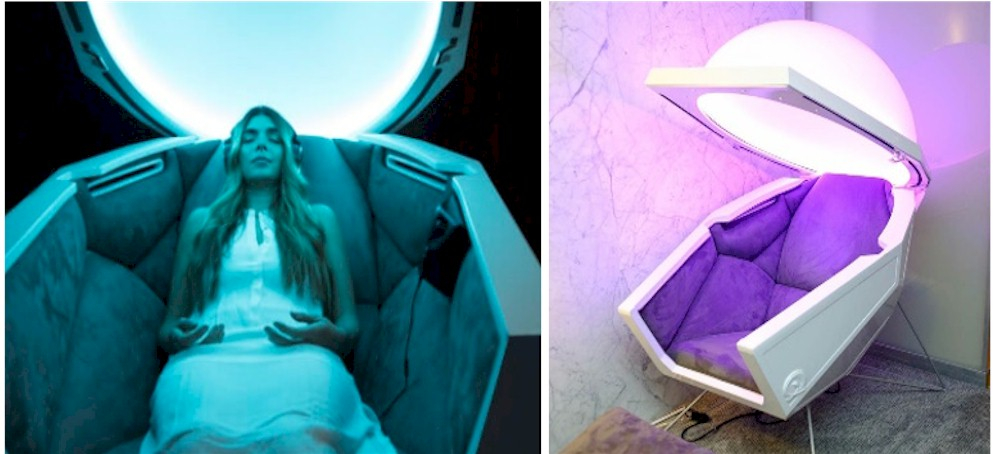
Guests suffering from jet lag can take a 20-minute deep-sleep immersive powernap in a Somadome to help reset their internal clock.
Hibernation Pods
High tech sleep technology has been a fascination of science fiction writers for decades, from 2001, A Space Odyssey to Alien, where long range space travel is facilitated by futuristic hibernation chambers. In an article I wrote a few years ago, I imagined a future that as sleep technology continued its rapid advance, we might very well see some form of short-term hibernation device as a real option in hospitality offerings. I predicted that guests may one day be able to bed down in a stylish super-comfortable hotel room hibernation chamber for a 30-minute power nap or for a full 8-hour sleep. Well, only a few years later that future appears within reach.
The Carillon Miami Wellness Resort provides guestrooms with a Sonadome, a futuristic meditation pod that utilizes binaural beat technology, microcrystalline tiles, and LED color therapy to induce a 20-minute meditative state equivalent to a powernap. The Carillon wellness center also offers a therapeutic meditation sofa that utilizes VibroAcoustic, ElectroMagnetic and Infrared (VEMI) technology designed to use sound resonance and harmonics to remove electro-smog radiation and detoxify the body.
According to the resort’s website, VEMI sessions can shift the body into a parasympathetic state to reset, restore, and rebalance the body’s integrity through a combination of vibroacoustic, electromagnetic, and far infrared heat modalities. Both VEMI technology and Somadome represent advanced approaches to enhance relaxation to induce a short-term restorative sleep-like state. Though not quite there as hibernation pods, they can certainly be recognized as positive steps towards an amazing hospitality amenity of the future.
Conclusion
For some guests, warm socks, a brandy sniffer, and a Brahms lullaby may be all that’s needed for a soothing night’s slumber, but as sleep science continues to evolve, fueled by advancements in AI we can expect to see amazing innovations and improvements to that most-essential hospitality service, a good-night’s sleep.
Fundamental to the continued advancement of sleep science is the quest to understand the processes and dynamics of sleep physiology. Pittsburgh Sleep Quality Index (PSQI), the most widely utilized instrument for assessing sleep quality, measures seven components for analysis - sleep duration, sleep latency, sleep medications, daytime dysfunction, sleep disturbances, sleep quality, and sleep efficiency. Artificial intelligence-based sleep modelling of those components will vastly improve analysis of sleep tracking data leading to advanced strategies for optimizing sleep quality.