





Social Media Trends and Channels: What Is Best for You?
By Robert O'Halloran






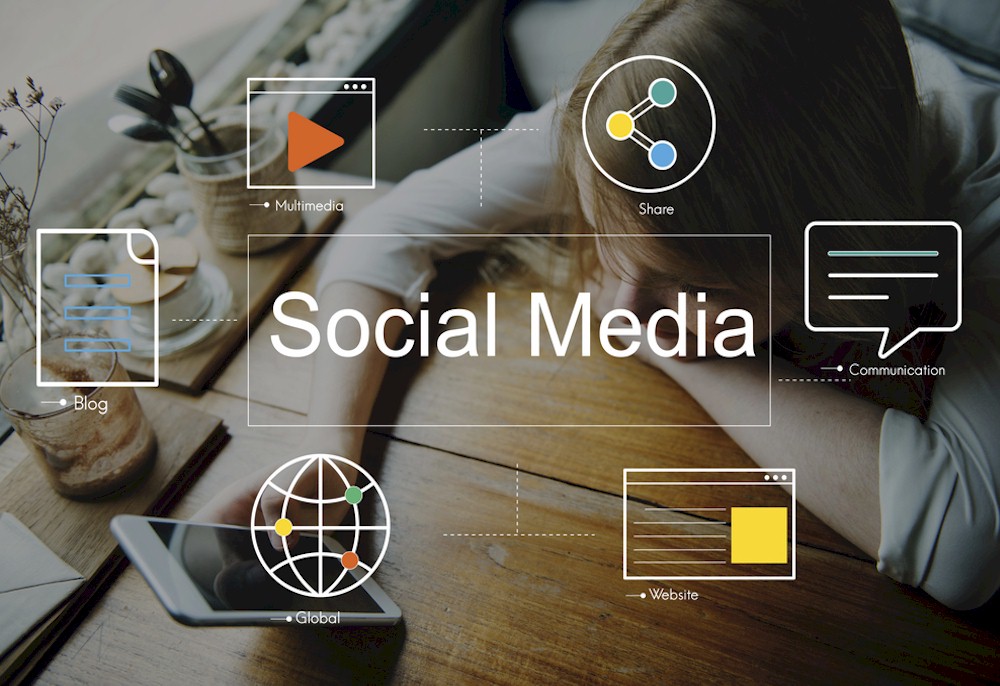
Social media is everywhere. Platforms that started as social interactions for friends, groups, and family have now evolved into business tools. The efficiency and effectiveness of social media as business tools depend on their decision making and the metrics used. In our business, we have several options at our disposal: Facebook, LinkedIn, Instagram, X, TikTok, Reels, YouTube, Blogging, and others. Social media has become a universe of its own ; a place where people go to speak their minds, connect with friends and family, stay informed, be entertained, find inspiration, and even make purchases.
Trends and Innovations
Socialmedia platforms are essential for marketing, enabling hospitality businesses to reach a wider audience, engage with customers directly, and build brand awareness. Specifically, that is, Build Brand Identity through targetedadvertising and promotions .
Social media platforms provide an unprecedented opportunity for hotels, resorts, and restaurants to establish a global presence. Engaging visuals, captivating videos, and insightful content enable brands to craft compelling narratives that resonate with potential guests, influencing their perception and choice of accommodations. The most obvious benefit of social media in hotels is that it helps to grow online presence dramatically, placing your hotel in front of potentially millions of people. Forbes noted that social media includes the rise of social media search optimization, X’s continued monetization evolution, a broader rollout of Instagram threads, adoption of YouTube Marketing, Especially YouTube Shorts and the merging of the Metaverse and Artificial Intelligence and finally, shifting to nano-influencers.
Social Media Today (from an Education Perspective!)
Social media changes the way people communicate and share information, provide feedback, and give opinions. Online platforms can also impact the decision-making process of customers. Generally, our students tell us that Facebook is for old people. What I hear when they say that is, ok we need to target the parents of traditional college age students. LinkedIn is the professional platform and for us that means business partners, recruiters, and alumni. Instagram and TikTok connects more readily for students and the Gen Z market. For us, the trick is to identify potential students ranging from the traditional high school graduates to non-traditional older workers who are considering getting their degrees, certificates and or micro-credentials.
For the hospitality industry, which relies heavily on reviews and word-of-mouth, social media becomes even more important, with 49% of hoteliers ranking social media as their second most important sales and marketing strategy. Social media goals are increased awareness, improved guest/customer engagement, create a competitive advantage, aid in targeted advertising, enhance reputation management, and support increased bookings and sales.
When planning for your social media campaign(s) be prepared and answer the following questions for yourself:
- What is hotel social media marketing?
- Why social media is important to hotels?
- How does social media marketing impact hotels?
- How do you create a social media strategy for hotels?
- Social media marketing tips for luxury and boutique hotels
- What are the best social media marketing platforms?
- What social media platforms are hotels using?
- What are the Top hotel social media marketing tips for your business?
Linkingsocial media with your business brand can gain your company enhanced benefits. In terms of brand reputation, include, Note, my observations are included in the list shared.
- Improve return on investment (ROI): Note that social media as a channel of a business marketing program should have a return on investment. How social media efforts are assessed, and the resources needed to support social media efforts will be discussed later in the article.
- Increase sales and bookings: The bottom line and certainly part of ROI discussions are increases in sales and bookings.
- More loyal and repeat customers: Keeping those loyal guests and or customers coming back is important and the connection to a business’s social media platforms keeps guests/customers current.
- Monitor online presence and customer feedback: Social media has provided guest and customers with the ability to quickly share feedback and the expectation to seek a resolution if there is an issue.
- Understand detractors and be able to react quickly when needed: There are differences between concerns, complaints and rants. Managers of these platforms need to deal with any issues immediately.
- Maintain consistent branding and messaging: The messaging on the platforms needs to maintain a consistent message and brand indicators. These brand images and or “mottos” are expected and needed to maintain the connection with guests.
- Prevent crises and reduce their impact: Bad things or crisis management things are often unpredictable and occur immediately. Social media as part of a “Crisis or Risk Management Plan” needs to monitor, identify, react, manage (limit) and use the platforms to control the post crisis time and position the business in a preventative mode.
In this era of the hospitality industry, every customer exchange on social media is your chance to make a lasting impression. With the right tactics and tools, a hospitality social media marketing strategy can increase brand awareness, gain new customers and supercharge long-term loyalty. New protocols during the pandemic challenged restaurants, bars, hotels, resorts, airlines, event spaces and tourism agencies to rethink how they connect with their audiences. Companies turned to social media to share updates, address queries, respond to feedback and provide personalized experiences more frequently.
Consumer preferences for human-focused, video-centric content push hospitality brands to relate to their audience on social differently, demanding more from the people behind brand accounts. One example is, “Vail Resorts uses audience demographics from each social media platform to inform their strategy. Different resorts—destination, urban, local and regional—all lean into each social platform’s unique content types and audience demographics to reach the intended user. They all approach each app uniquely based on their brand. Some take a heavier video-first approach to inspire, while others lean into photography and community management to connect.”
Social Media Resource Needs
How many social media accounts and platforms can your business manage? As noted by many, no one can do social media alone especially in larger businesses and or businesses that are growing and using social media as a tool for growth. Responding to comments could take up a lot of your time. Included below is a brief review of resources needed to manage a business’ social media platforms effectively and efficiently.
Staff: Employees are key resources for your social media. People are needed to create content, monitor action plans to meet social media goals, posting, and managing comments and complaints. Not all organizations are big enough for 24/7 staff. The criticality of managing social media is illustrated in a study reported on in Harvard Business Review in conjunction with TripAdvisor. It found that once hotels started responding to reviews, they saw a drop in the amount of short negative reviews. Knowing that management was reading and responding to reviews made for more thoughtful posts.
Skill: What is the skill set needed for the tasks associated with social media. As I have noted previously, my social media expertise has limits and then the question becomes where does one find social media expertise? From the perspective of what we see in education, we have had a number of our students secure positions in the hospitality industry as social media managers. The question is, what is the optimal skill set?
Budget: Employees, time spent, internet and technology, and quality resources for posting, photography and more. As noted above, a 24/7 staff is not an option for many businesses, so their decision-making needs to include prioritization of posts, the number of people assigned, quality assurance standards and more.
Goals: Before heading down the social media channels, deciding what platforms, what kind of a presence is needed etc., an organization needs to focus on what its goals are. As referred to earlier in the article, some of our social media goals are recruiting new students. For example, for all our segments, we note age, gender, on campus versus online, consideration of geography, in state, regional (in our case the Southeastern U.S.A.) and more. For a business, a hotel, restaurant etc. what are your target markets and how can you reach them via social media?
Ultimately, making decisions as to which social media options a business would like to engage in is critical. Some options (below) may not be applicable to your business and others might be a perfect fit, based on your goals and objectives. It is noted that many platforms aren’t necessarily optimal for travel brands. Note, my lack of commentary below, is not a reflection on the platform, just my limited engagement with the platform and therefore not commenting on what I do not know about. Some options may include your business options and or options with which you may not align.
- TikTok: I am not a TikTok user but have seen a cross section of their content. This is a controversial topic in social media, especially since the U.S. government action requiring the company sever its ties with China.
- YouTube: I like YouTube; however I initially did not understand the revenue generating opportunities associated with sharing videos. I will note part of my learning curve was our university’s business relationship with Mr. Beast, who happens to be from the community where our university is located. It was hard to miss that Mr. Beast has been the largest producer of video content for YouTube. We, as a program, have multiple students working for them for at least a part of their internship and gaining unique experience.
- Pinterest: No Experience, see Carnival Cruise note.
- Reddit: No Experience.
- LinkedIn: I am a regular communicator on LinkedIn, in our case we communicate with our alumni via this platform. LinkedIn has also seemed to evolve into more than posts, it is noted that there are articles, and other resources connected with this option.
- Twitter or now X: I had a twitter account once and have never used it.
- WhatsApp: I have limited familiarity with this option for group communication.
- WeChat: No Experience.
- Facebook: Okay, now for the old folks social media option. We, the school have a Facebook page and use it for program news and events most targeted at the parents of our students. We have also used Reels on Facebook.
- Instagram: Yes, we, school account is used regularly. This platform is a good connector for current students, potential students and alumni.
- Snapchat: No Experience.
Social Media Metrics
As in any business venture, it is important to monitor metrics that will provide the decision-makers data to support decision-making as it pertains to social media. These metrics can generate competitor reports and gain a comprehensive market positioning insight for your brand. Additionally, metrics can be tied to audience insights, competitor insights, and brand insights. Monitor key audience metrics to uncover trends, sentiment and engagement across channels, gaining valuable insights into audience preferences.
One recommendation has been to put your platforms in an ROI showdown of every platform you use and weigh them against each other and, therefore, find a channel that’s lagging behind. Even if it generates a positive ROI, it may not be worth the investment if there’s greater potential for growth with your other platforms. Think about all your platforms, even the platforms for the old people, (ha! ha!) Facebook and hashtags, to help get your message out. For example, the Top 10 Facebook hashtags for travel are shared below. Highlighted are three hashtags that connect readily with hospitality and tourism.
- #travel - 174 million
- #vacation - 38 million
- #travelphotography - 33 million
- #wanderlust - 18 million
- #tourism - 15 million
- #traveltheworld - 7.6 million
- #adventuretravel - 3.3 million
- #solotravel - 1.9 million
- #travelpics - 1.1 million
- #goexplore - 658k
The point being that hashtag analytics provide you with important metrics on hashtag usage and performance. This helps you track which hashtags are popularly used in your industry, how popular they are and much more.
The key significance of tracking social analytics is to prove ROI, evaluate the success of social media campaigns and guide informed decisions for social media strategies. The main areas of social media analytics include performance metrics, audience demographics, competitor insights, paid ad results, influencer impact and brand sentiment.
When creating your social media strategy, you’re choosing goals and objectives that you want your marketing efforts to support and help reach those goals. First and foremost, you need to measure the overall performance of your social media efforts. This includes social media metrics, including impressions, reach, likes, comments, shares, views, clicks and sales. Additionally, there are also paid social analytics. The analytics for these can include total number of active ads, clicks, click-through-rate, cost-per-click, cost-per-engagement, cost-per-action, conversion rate and total ad spend.
Additionally, there are influencer analyses where you need to track the success of partnerships. I remember talking about influencers early on and I did not understand what it meant. When one of our students told me they were intending to be a social influencer, I was amazed. Is that a job? Yes, it is! If you are participating in influencer marketing campaigns, tracking the success of these partnerships is essential to proving ROI. Data will include the number of posts created per influencer, total number of interactions per post, audience size of each influencer, and hashtag usage and engagement.
Social Media in Education: Teaching and Learning Tools
The topic of social media in education is a distinct application but has many similarities to commercial businesses in terms of managing and utilizing social media as part of the marketing efforts of programs, departments and schools. In our case we utilize our social media as marketing but also to support student recruitment efforts.
As noted previously, we do not have the resources of a staff or budget to conduct the business of social media marketing. So, as they say we do what we can with what we have. In our scenario, we have an active Facebook page and an active LinkedIn page, as well as utilizing Instagram, Blogging and other channels. The first issue was to create staff. We, our school, needed a social media coordinator, and we created one by utilizing student expertise to work part-time as our social media coordinator. These students have a reasonable familiarity with social media and also receive some training on university policies, and procedures for posting to our social media.
The student coordinator works with a Communications Director and me, to highlight activities, events, students and alumni with the focus to enhance the awareness of the school via social media. While one person cannot cover our limited social media 24/7, we have established protocols for responses and scheduling posts. This description highlights an academic units efforts and is reflective of the business community regarding the establishment of goals to utilize social media.
From an educational perspective social media is integrated into most sales and marketing courses and beyond to create brand awareness and build a positive reputation for hospitality businesses and allied organizations like universities programs. The message here use what you have to at least start your social media processes. There may not be a sufficient budget and or staff but do not wait. Just get started.
In a class setting, being able to note hospitality industry social media applied examples is helpful for students to see the connection of class and industry practice. For example, Carnival Cruises created a “Cruising Tips ” Pinterest board for those still thinking about going on a cruise or have recently booked. The guides are a nice mix of what to expect when you go on a cruise to how to stick to your exercise routine. Also, Marriott Hotels consistently uses user-generated content to promote its various hotel locations. Providing glimpses into what it’s like to stay at a location. While some photos and videos on your account will be staged, you can bring in additional authenticity by reposting ones created by their guests.
For learning assignments on social media, a faculty member could also create an assignment that identifies a hospitality and or tourism business, and a student could be required to research and identify a company’s online profiles and platforms. Then make recommendations for social media channels that should be used and be able to explain why those are the optimal choices. The learning goals here would be an enhanced social media tied to specific businesses, and then, in somewhat of a consultive role, the students can make recommendations on what platforms and channels would be the best fits for that business using the profile provided in this article or some other means defined by an instructor.
Finally, with my narrow social media experiences, I have learned a lot working with students and industry partners about how social media can be a valuable tool in marketing a hospitality or tourism business. Technology, in general and social media specifically, is here to stay. Our best efforts are needed to use these tools in the interest and education of people (our guests, customers and or students), hospitality businesses and host communities to create a sustainable social media environment.
University programs can be a start, and then our graduates can apply their social media skills to specific hospitality and tourism businesses (hotels, restaurants, clubs, cruise lines and more) using the professional and ethical standards for social media set collectively by owners, operators, guests, community leaders and government officials.