





Hospitality Construction: Trends and Challenges for the Future
By Robert O'Halloran







I am not a construction guy. I know some construction content from a managerial perspective but enough to either get me into trouble or keep me out of it. From a business perspective not every hospitality decision maker is a construction and or renovation expert. However, I suggest that managers, general managers, and departmental division heads would benefit from some knowledge of construction practices.
Consider key terms for construction and construction management. Terms could include, per industry experts feasibility study, design and build, project management, budget performance, schedule performance, and quality. Additionally adding phrases like, hotel concept framework, health and safety guidelines, due diligence, and the specific requirements for hotel management agreements. Hotel concept frameworks for example, are inclusive of telling the hotel projects story for design, for people needed to operate the business and space required to provide the hotel the revenue producing choices it needs.
All the terms pointing towards decisions on the number of guest rooms, food and beverage outlets, meeting and conference spaces, employee spaces, public space, indoor and out, and more. Therefore, construction quality, meaning that relationship between price and value and final project output for both construction and guest experience is a key for construction projects. These terms are a collection of topics that relate to the phases of construction which are inclusive of pre-planning, construction operations and post construction work which is tied to punch lists and quality assurance. JLL’s 2025 U.S. Construction Outlook examines three key focus areas for the industry: getting ahead of the curve, critically embracing sustainability and innovation, and building for people and resilience.
Construction supply chain management (SCM), is another important topic that refers to the management of complex systems in which the performance relies on a set of hundreds of decisions delivered by multiple independent firms is considered a key construction industry variable. Noting that clients, consultants, contractors, designers, subcontractors and suppliers are the key actors connected by interfaces of knowledge transfer, information exchange, financial and contractual relationships (Behera et al. Citation 2015).
The trend in construction SCM practice goes towards the more external integration which requires more involvement and cooperation of SC participants including supplier integration, contractor integration, designer integration and owner integration. This increases the productivity of construction planning and development and reduces the risk of non-compliance amongst the SC participants (Bankvall et al. Citation 2010).
Overall hospitality construction management illustrates that a hospitality manager, GM or managing director can embrace a project manager like-role that oversees all aspects of the construction process, coordinating teams, ensuring tasks are on time, and resolving issues. The relationship of a hospitality (hotel) general manager and project management is a natural one.
For example, think about the multiple content areas and themes that hospitality managers use when working on a renovation or in some cases a full-blown construction project. These connections look like subjects in a college of business, inclusive of hospitality operations, supply chain management, management information systems, finance and management leading all the way to ribbon cutting and marketing. Additionally, hospitality construction experts suggest that sustainable construction methods and materials be considered.
The knowledge of construction as a general manager - project manager highlights the need for operations professionals to be engaged in the construction process. For example, I can recall being the opening manager of a food and beverage facility in Northern California and arriving onsite prior to opening to recruit and hire staff and get the business of managing this facility set up before opening the doors for daily business. When I arrived, I asked for a walk through, inclusive of front of the house, back of the house, delivery area and service stations with the project manager. Included in this I asked to go to the roof, to ensure that I understood where each piece of equipment (ventilation hoods for example) is located and where they were on the blueprints?
Additionally, I wanted to know where all the reset switches/valves were for all equipment, power and water sources and shut-off valves. This information can prove valuable as an operation progresses and gets increasingly busy. Also, in this process, I noticed when looking over the main service area for the servers and bussers where the sinks were? I did not see one and the response was that there was not one in the service area. I inquired why? and the project manager’s response was “it was not needed.”
The conversation continued with questions and answers inclusive of the company decision makers and we got sinks because we needed water for service and the pipes were there. The point was that the project team focused on getting the facility finished (rightly so) for a construction project and I was thinking of it as an operating restaurant. My note to self was that there should be operational input in construction projects before the building is finished and more specifically in the planning phase.
What Do Owners and Managers Need to Know? Construction Trends
Hotel and restaurant construction trends are focusing on integrating technology for contactless services and energy efficiency, incorporating sustainable and biophilic design elements, and creating flexible, multifunctional spaces to cater to diverse guest needs, including remote workers and wellness-focused travelers. Hotel construction also sees growth in the upper midscale and upscale segments, with increased development of extended-stay hotels and the repurposing of historical buildings into unique hospitality spaces. For example, hospitality construction trends include:
1. Sustainability and Wellness: Green Practices
- Biophilic Design: Incorporating natural elements and textures.
- Health and Wellness: Dedicated wellness amenities like fitness and spa facilities.
- Technology and Smart Features, plus the expected digital services, contactless check-ins, digital guest services, and app-controlled room features.
- Flexible and Multifunctional Spaces- Adaptable Interiors that are versatile, and easily reconfigurable spaces for guests.
- Focus on Lobbies: Open designs, with restaurants, bars, and coworking spaces.
- Construction & Design- Extended-Stay Dominance
- Upscale Growth: Investment and construction in the upper midscale and upscale hotel segments.
- Repurposing Historic Buildings to create unique experiences.
- Parametric and Computational Design, that are Algorithm-driven designs is being used to create complex and futuristic structures to enhance exteriors.
Sustainability Themes in Construction
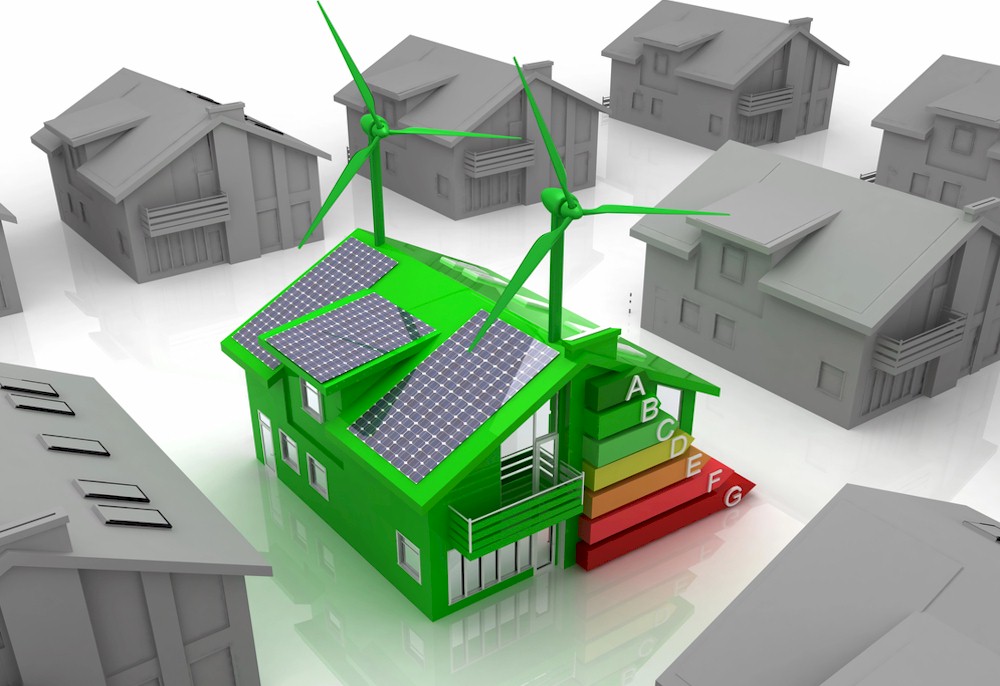
Experts recommend that construction managers need to identify sustainable construction supply chain management (CSCM) trends over the forthcoming years and adopt suitable techniques to manage construction projects strategically, tactically, and operationally. Sustainability as a practice, is a tool to protect the environment via sustainable practices, such as improving energy efficiency, mitigating carbon emissions and solid waste, and improving the well-being of their guests and staff through various corporate social responsibility (CSR) initiatives are all ties to construction planning and implementation for building.
Sustainability should also become part of everyday hotel operations and everyday life by embracing good for the environment, good for the business and good for the community. A reminder that sustainability is inclusive of a mind set that is good for the environment, good for the community and good for the business.
Sustainable Construction Opportunity
Many hotels are pursuing environmentally conscious certifications, as previously noted, Leadership in Energy and Environmental Design (LEED) , designed by the U.S. Green Building Council (USGBC). To achieve a LEED rating, hotels must prove their property’s construction, design and daily operations meet stringent LEED standards through third-party verification. LEED certifications can connect hotels to sustainability practices, which in turn links to environmental stewardship, energy and water efficiency, sustainable building materials, indoor environmental quality, design innovation, site sustainability, transportation, community impact and operational practices.
Certifications can function as a guide to sustainability and provide structure and offer structure in the planning and building and the operations of hospitality construction. In a sustainability session in which I was a presenter, we were discussing sustainability practices and a participant noted I cannot go through that process, “I don’t have the resources and or time.” My recommendation to him was to think long term and not to try to adapt everything at one time to sustainable practices. Think of sustainability as a tool and a long-term commitment.
To use an old training term, chunk the sustainability process down and take smaller bites rather than an all or nothing approach. Any operator with a focus on sustainability should do what they can, when they can, “just get started”! Sustainability practices can be part of hospitality construction and operations starting now. Sustainability policies should be in place from the beginning of a building configuration to ensure that its development meets sustainability requirements. Specific policies, which cover sustainability standards and guidelines, should be adopted. Opportunities for integration of sustainable practices are everywhere. If we review a sample of the major hotel brands via Matthews, a closer look at brand-level development activity in the U.S. is provided and includes for example;
- Hilton Worldwide: Hilton claims the largest share of rooms under construction globally (~251,700). Estimates suggest 1,000 U.S. projects.
- Marriott International: With 1,333 properties under construction and an additional 306 in final planning, in the U.S.
- Wyndham Hotels & Resorts: Wyndham’s pipeline is notable for its 77% focus on new construction, with an estimated 162 U.S. projects in final planning.
There is significant construction volume, and pressure to embrace sustainability. Over the past five years, hotel construction has navigated a highly dynamic environment marked by shifting travel habits, pandemic disruptions and rising competition from alternative lodging platforms. Looking ahead the U.S. hotel market is expected to grow through 2026 and Lodging Econometrics forecasts that nearly 1,000 new hotels, with over 100,000 rooms, will open in the U.S. by the end of 2026.
Experts also note that hotel construction trends for 2026 will focus on: guest experience and design, emphasis on wellness, flexible and multifunctional spaces and a shift to extended-stay and mixed-use, sustainability and eco-friendly practices and high-performance materials, energy and water efficiency, waste reduction, technology and innovation, inclusive of smart hotels, modular and prefabricated construction and AI-enhanced BIM and digital twins, Artificial intelligence (AI) is being used with Building Information Modeling (BIM) to optimize building performance.
Benchmark Signature Properties: Success and Best Practices!
I love an old hotel that is managed well, as a business and as a structure. Buildings that are not well maintained get tired, and worn, and if there is no plan to make these signature properties sustainable, they will exit the market. There are some notable examples in our industry that are preserving history and embracing sustainability. I urge my students of all ages to acknowledge that history matters, and it can matter in hospitality construction.
When I think of operating historic signature hotels and maintaining an optimal level of service, style, and facility atmosphere, I think of Omni and Fairmont. They do not stand alone in the sector, but both have a stable of historic hotel properties that are on display across North America. From my hometown (Boston guy), I immediately think of the Copley Plaza (Fairmont) and the Parker House (Omni). Additional examples, include:
Historic Fairmont Hotels
- Fairmont Banff Springs: A historic "Castle in the Rockies" that opened in 1888.
- Fairmont Château Frontenac: Located in Old Québec, this hotel is built on the site of former governors’ residences and overlooks the St. Lawrence River.
- Fairmont Empress: An iconic hotel in Victoria, British Columbia, which opened in 1908.
- Fairmont Royal York: In Toronto, this grand hotel opened in 1929.
- Fairmont San Francisco: A Beaux-Arts hotel on Nob Hill that first opened in 1907.
- The Savoy, A Fairmont Managed Hotel: A pioneering London hotel on the Strand.
Fairmont Hotels & Resorts has a mission of stewardship towards historic hotels, noted in their Luxury Insights Report, V. 1, focusing on preserving their heritage while updating them with modern luxury amenities The company views these properties not just as buildings but as iconic landmarks with a story to tell. Their renovation philosophy includes balancing old and new, honoring distinctiveness and embracing sustainability. The mind set of stewardship is critical to their success.
Omni Historic Hotels
Omni Hotels & Resorts produces a blog which references its historic hotels and invites guests to learn a little more about their most iconic hotels and resorts. A sample of these properties is below:
- 1766: The Omni Homestead Resort
- 1855: Omni Parker House
- 1902: Omni Mount Washington Resort
- 1913: The Omni Grove Park Inn
- 1916: Omni William Penn Hotel
Omni’s mission regarding historic hotels involves a strategic balance of preserving historical integrity and incorporating modern updates and amenities to maintain their appeal for contemporary guests. The action plan for these renovations is to be achieved through significant investments in renovations that restore and honor original architectural details while simultaneously upgrading infrastructure, guest experiences, and technological features. Their focus is architectural integrity, honoring history and collaborating with local, state, or federal historical and preservation bodies. Modern updates and amenities include infrastructure, modern comforts, technology links, guest experience and sustainability, for example, the Omni Homestead Resort renovation cost $150+ million.
Marriott, Hilton and InterContinental, and others also have signature historic properties. For example, Marriott has the Mayflower Hotel in Washington D.C., and The Algonquin as part of their Autograph Collection in New York City. Hilton boasts the Waldorf Astoria in NYC, and the Chicago Hilton and the Hotel del Coranado in Coranado, California as part of its Curio Collection. InterContinental Hotels Group has the Barclay in NYC, and the Willard InterContinental Washington, D.C. There are also many independent historic hotels that capture the atmosphere and flavor of a destination or region.
For example, the Breakers is a main stay in Palm Beach, Florida, the Broadmoor in Colorado Springs, Colorado and the Greenbrier in White Sulphur Springs, WV. Also having lived in Memphis, the Peabody is one of my favorites. There are of many other great destination hotels, urban or destination resorts too numerous to list. The ownership of these independents has and continues to successfully operate these historic businesses and their physical structures successfully.
What can we learn from signature hotels about construction? An old building, historic or not, can provide a great venue for a lodging facility that embraces sustainability in its construction and renovation of properties. I like to think that this model could work for all lodging properties, brands, independents, new construction, and renovations.
Construction and the Curriculum
In a class that I teach, Hospitality Financial Management, students research, assemble and analyzing data to determine the feasibility of a hotel. Our course partners with regional and municipal partners on what we refer to as “live” projects. The municipalities have an interest to attract a lodging operation to their location to bolster their economic health. Our projects stop short of construction management (that is in a different college and for another semester). Currently, our students utilize the HVS Hotel Development Cost Survey.
In this current semester we are using the HVS U.S. Hotel Development Cost Survey 2025 , which supports the task of evaluating the comprehensiveness of a hotel development budget. Based on HVS reviewing actual developers’ budgets, as well as preparing the annual HVS U.S. Hotel Development Cost Survey, their summary format for hotel development budgets, supports the basis for the hotel construction costs in the projects. In the course we utilize this and other tools to assess the approximate cost for a hotel and what impact would result from building sustainably.
On a college campus, the university may or may not have a Construction Management program. Our campus has one and it is a popular area of study. Having a construction management department and a hospitality school is a good opportunity for an inter-campus collaboration, that is, creating an projects or assignments that embraces a sustainable construction process.
A Hospitality Construction and Renovation Thought Process: Going Forward
When planning for construction and or renovation, think of making a hotel sustainable a cornerstone. Experts note, that a sustainable hotel is not only defined by energy efficiency, but also by the use of responsible resources, the integration of renewable energies and the use of ecological materials in its construction and design for example, energy efficiency, responsible water management, use of sustainable materials and promote recycling and green spaces.
Sustainable construction reduces environmental impact, and improves guest experiences, and adds value to a brand and can generates significant long-term savings. Experts note the 7 Principles of Sustainable Construction as: sustainable design, durability, energy efficiency, waste reduction, indoor air quality, water conservation and sustainable building materials.
Transforming a traditional hotel into a sustainable one requires planning and a comprehensive strategy that encompasses everything from construction to daily operations. The use of sustainable materials in the design, implementation of smart technology, and renewable energy and efficient air conditioning. For example, sustainable construction materials identified online and via an AI prompt include (sources across the web); bamboo, recycled plastic, recycled steel, hempcrete, reclaimed wood, cork, mycelium, rammed earth, sheep wool, straw bales, plant-based polyurethane rigid foam, recycled glass, recycled rubber, cob, cross laminated timber, mass timber, mud brick, precast concrete, stone, terrazzo, Timbercrete, Ashcrete, bendable concrete, and Ferrock.
I submit that a model for hospitality construction could be to build with the vision of creating hotels that emulate hospitality heritage sites. As I noted initially, I love an old hotel! Consider in the construction planning process, what vision is needed, what are the strategic goals and operators can collaborate with planners and leadership to figure out the tactics to create a hotel or hospitality space for a lifetime. The historic hotels noted above are unique and built to last a lifetime, and many are considered signature properties for their brands.
If this is an acceptable theory then the planning, design and construction process needs to consider planning a future for buildings that will be a central part of a community and be an example of sustainable construction. This type of model embraces evolving construction standards that will consider enhancements and additions, renovations, innovative technologies and be able retain its architectural integrity. Study the great old hotel structures that are now surviving and succeeding in a new era as benchmarks for hospitality construction.
 Prof. O'Halloran
HotelExecutive retains the copyright to all articles published on HotelExecutive.com. Articles cannot be republished without prior written consent by HotelExecutive.